Use Code WELCOME20 -20% OFF for 10k Challenge and Up
Risk-to-Reward Ratio Explained
Risk-to-Reward Ratio Explained
Introduction
The risk-to-reward ratio is one of the most important concepts in trading because it defines the relationship between how much you are willing to lose and how much you aim to gain on a trade.
Many traders focus on winning trades. Professionals focus on expectancy. The risk-to-reward ratio is what allows a trader to remain profitable even with a relatively low win rate.
What Is Risk-to-Reward Ratio?
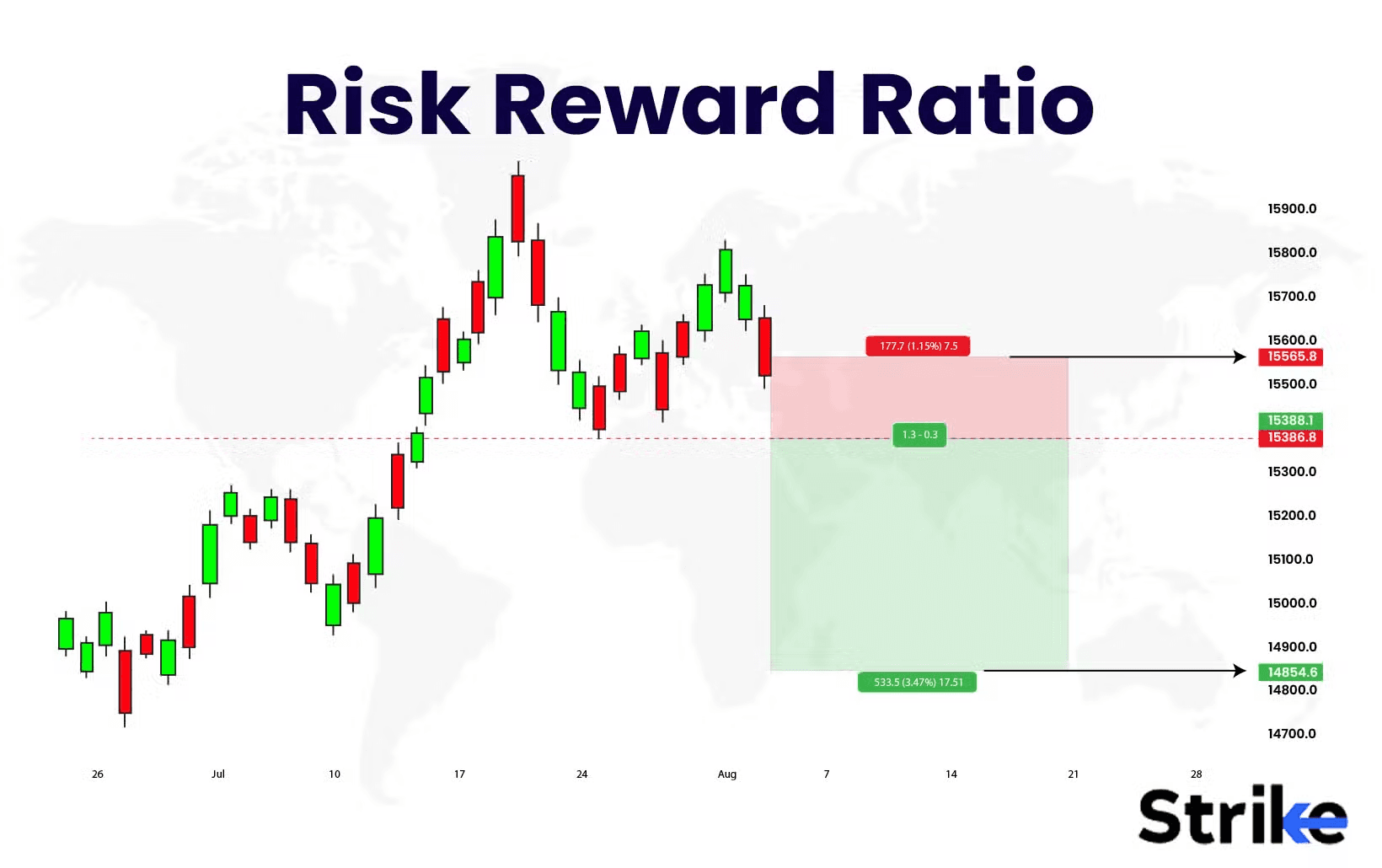
The risk-to-reward ratio compares the potential loss of a trade to its potential profit.
If you risk 1 unit to make 2 units, the risk-to-reward ratio is 1:2.
If you risk 1 unit to make 3 units, the ratio is 1:3.
Risk is defined by the distance to the stop-loss.
Reward is defined by the distance to the take-profit.
This ratio is planned before the trade is entered.
Why Risk-to-Reward Matters
No trader wins all the time. Losses are part of the process.
A favorable risk-to-reward ratio ensures that:
Losses are small relative to wins
A single winning trade can offset multiple losing trades
Emotional pressure is reduced
Risk-to-reward shifts trading from outcome-based thinking to process-based thinking.
Risk-to-Reward vs Win Rate
Risk-to-reward and win rate work together.
A trader risking 1 to make 3 does not need to win often to be profitable.
A trader risking 1 to make 1 must win much more frequently.
Professional traders focus on quality setups with asymmetric payoff, not on maximizing win percentage.
How Risk-to-Reward Is Determined
Risk-to-reward is not arbitrary.
Risk is determined by:
Market structure invalidation
Logical stop-loss placement
Reward is determined by:
Nearby liquidity or structure targets
Realistic price movement based on volatility
If a setup does not offer acceptable reward relative to risk, it is skipped.
Planning Trades Using Risk-to-Reward
Before entering any trade, a trader should know:
Where the trade is invalidated
Where profit is realistically taken
The resulting risk-to-reward ratio
This planning prevents emotional decision-making during the trade.
Trades that look good technically but offer poor risk-to-reward are rejected.
Common Beginner Mistakes
Beginners often:
Take trades with poor risk-to-reward
Move take-profit closer out of fear
Let losses run while cutting wins short
Ignore structure when setting targets
These behaviors destroy positive expectancy.
Risk-to-Reward in Prop-Firm Trading
Prop firms care more about consistency than individual wins.
A trader with good risk-to-reward:
Experiences smoother equity curves
Avoids deep drawdowns
Respects daily and overall loss limits
Risk-to-reward discipline aligns perfectly with prop-firm evaluation rules.
Risk-to-Reward Is a Filter
Not every market condition offers good risk-to-reward.
Professional traders skip many trades because the payoff is not worth the risk. Trading less but better is a sign of maturity, not hesitation.
Key Takeaway
Risk-to-reward defines the mathematical edge of a trading strategy. It allows traders to be wrong and still profitable. Mastering risk-to-reward shifts focus from chasing wins to executing a repeatable, sustainable process.