Use Code WELCOME20 -20% OFF for 10k Challenge and Up
Crypto Trading Basics
Crypto Trading Basics
Introduction
Crypto trading involves buying and selling digital assets with the objective of profiting from price movements. Unlike traditional financial markets, cryptocurrencies operate on blockchain technology and trade continuously, 24 hours a day, seven days a week.
Crypto markets are known for high volatility, rapid innovation, and strong sentiment-driven moves. This creates opportunity, but also significantly higher risk compared to traditional asset classes.
What Are Cryptocurrencies?
Cryptocurrencies are digital assets that use cryptography and decentralized networks to enable peer-to-peer transactions without a central authority. Prices are determined entirely by market demand and supply.
Bitcoin was the first cryptocurrency and remains the largest by market value. Since then, thousands of alternative coins have emerged, each with different use cases, technologies, and risk profiles.
How Crypto Trading Works
Crypto trading involves exchanging one digital asset for another, or for fiat currency. Trades are executed on centralized or decentralized exchanges through order books that match buyers and sellers.
Traders profit from price movement rather than from owning the technology itself. Positions can be opened in both rising and falling markets, depending on the platform and product used.
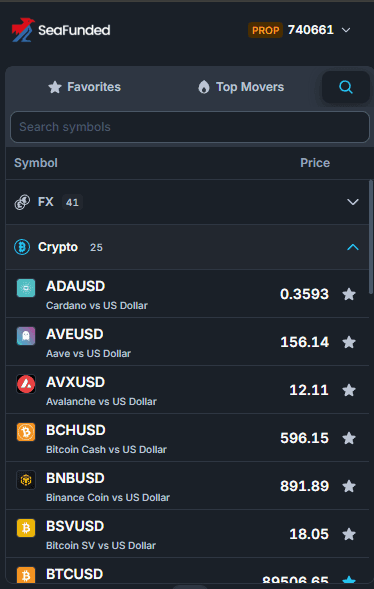
Major Crypto Assets
The crypto market is dominated by a few large assets that drive overall market direction.
Bitcoin often acts as the benchmark for the entire crypto market.
Ethereum plays a major role in smart contracts and decentralized applications.
Altcoins tend to follow Bitcoin’s direction but with higher volatility and risk.
Understanding market hierarchy helps traders manage exposure.
Why Crypto Prices Move
Crypto prices are influenced by a combination of factors:
Market sentiment and speculation
Adoption, regulation, and technological developments
Liquidity conditions and capital flows
Macroeconomic factors such as interest rates and risk appetite
Because fundamentals are harder to quantify, crypto prices are often driven more by psychology than by traditional valuation models.
Volatility and Risk
Crypto markets experience larger and faster price swings than traditional markets. While this creates opportunity, it also increases the likelihood of large drawdowns.
Risk management is essential. Traders must control position size, avoid excessive leverage, and accept that volatility is a defining feature of this market.
Leverage in Crypto Trading
Many platforms offer leverage in crypto trading. Leverage magnifies gains but also amplifies losses, often leading to forced liquidations if risk is not managed properly.
Professional traders treat leverage as a tool, not a strategy. Surviving volatile periods matters more than maximizing short-term returns.
Crypto Trading vs Long-Term Holding
Trading focuses on capturing price movement over shorter timeframes. Long-term holding focuses on adoption and long-term value potential.
Both approaches carry risk. Traders must avoid emotional decision-making, especially during rapid price movements driven by hype or fear.
Key Takeaway
Crypto trading offers high opportunity due to volatility and continuous market access, but it demands discipline, strong risk control, and realistic expectations. Understanding market structure and participant behavior is more important than chasing trends or narratives.